
Series, Parallel, or Both?
Posted by Braden on Jan 28th 2026
When you move the selector switch on your guitar or bass, are your pickups being combined in parallel or in series?
Most production guitars combine pickups in parallel when you select more than one pickup at a time (like the middle position on a Tele or the “2” and “4” positions on a Strat). Series wiring is less common from the factory, but it’s one of the most useful tone tools you can add because it changes not just the sound, but also output, feel, and how the guitar pushes the front end of an amplifier.
So what is really happening electrically at the switch and how can players use wiring to their advantage?
What exactly do “parallel” and “series” mean?
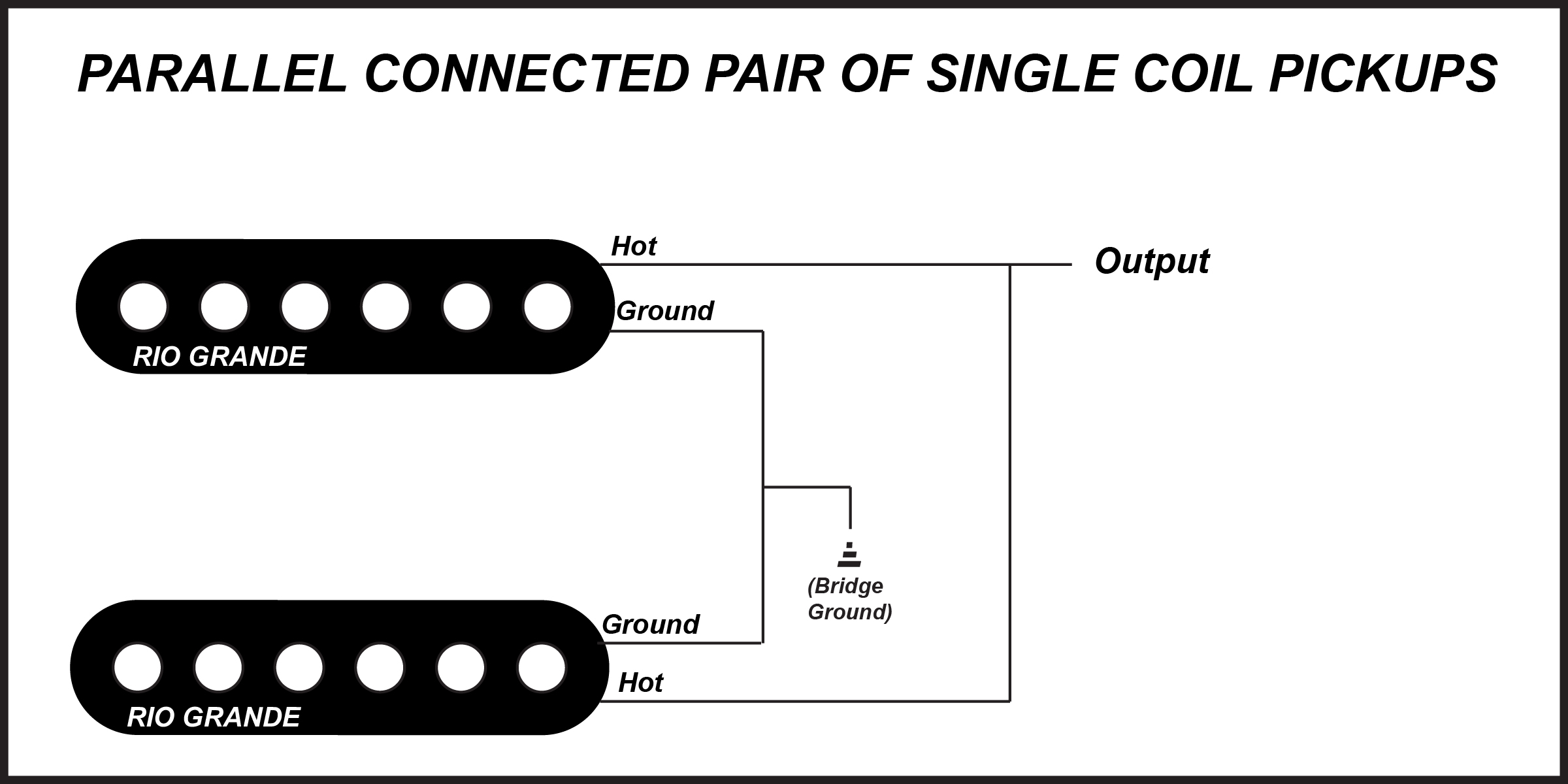
In parallel, both pickups feed the output side-by-side. Each pickup “sees” the volume pot and the rest of the circuit more or less normally, and their signals are blended together. This results in a clear, open top end and a tight low end while boasting a familiar two-pickup sparkle. One thing to note is that output in parallel is always less than a single pickup. For example, two 8KΩ singles in parallel have a resistance of 4KΩ. The actual HEARD difference is usually very slightly less, but never more.
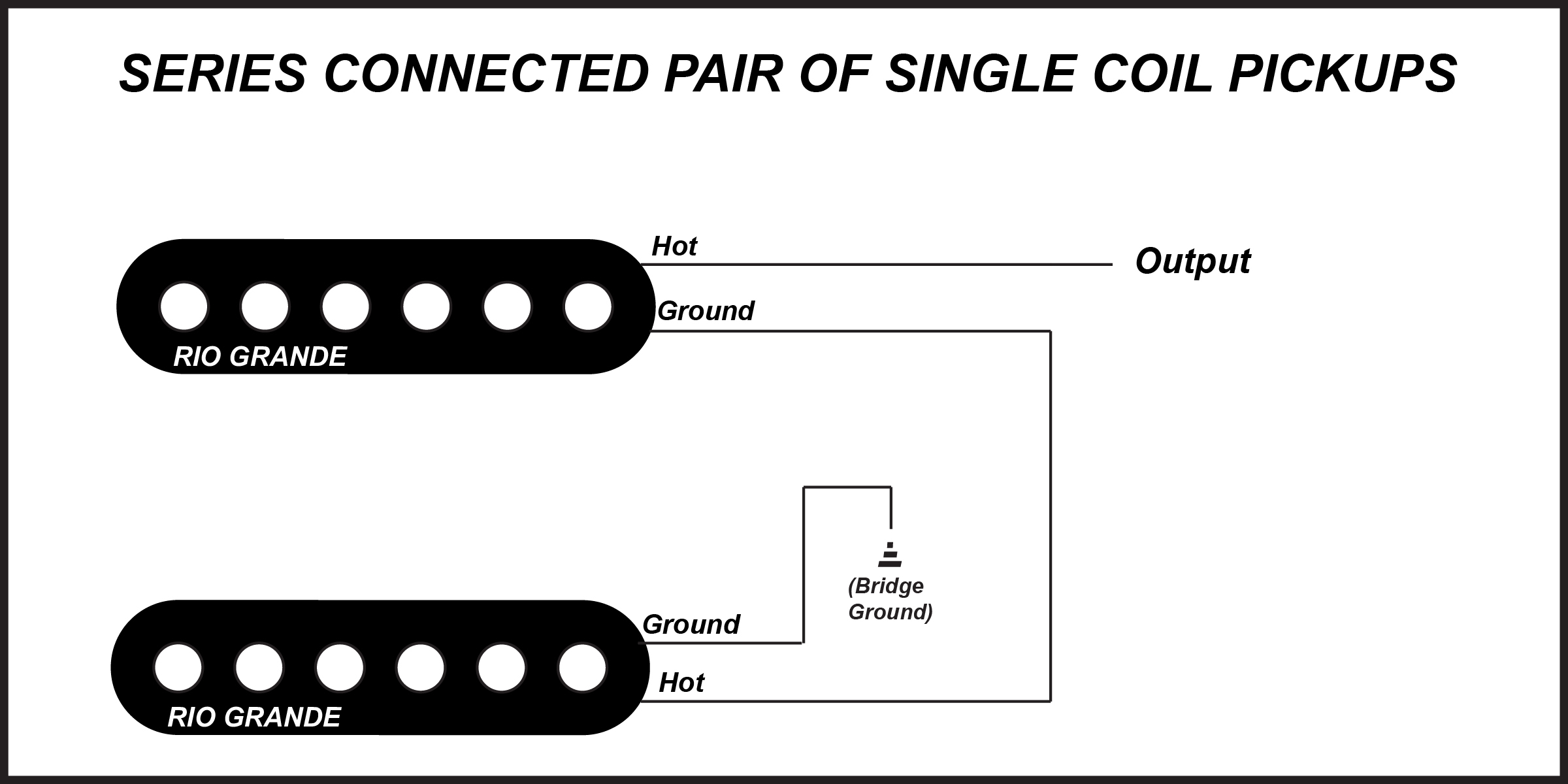
In series, the signal goes through one pickup and then the other, like stacking them end-to-end. Electrically, you’re adding the pickups’ outputs together in a more direct fashion. This results in more output, fatter midrange with stronger low-mids, a smoother top end; this is a humbucker configuration for all intents and purposes.
In the simplest of terms:
Parallel = blend
Series = stack
What is the switch doing?
A pickup typically has two ends, Hot (signal out) and Ground (return path). A selector switch routes which pickup hots reach the output, and will usually tie all pickup grounds to a common ground.
In parallel, both pickup hots are connected to the same output node.
In series, the hot of one pickup effectively feeds into the ground/return end of the next pickup, and only the “free” hot and “free” ground go to the guitar output/ground.
Parallel combines pickups at the output.
Series combines pickups before the output.
That “where” matters a lot for tone.
The Typical Telecaster Treatment
In a typical Tele with a 3-way switch, your pickup selection will be configured as follows:
1. Bridge alone
2. Bridge + Neck (parallel)
3. Neck alone
The middle position on a Tele, with the pickups wired in parallel, is generally known for being bright and snappy without being thin or harsh and is great for clean rhythm and edge-of-breakup tones. In this position the pickups are sharing the load and blending at the output, which keeps transients crisp and highs intact.
But what if we could unlock a fourth option?
The Best of Both Worlds
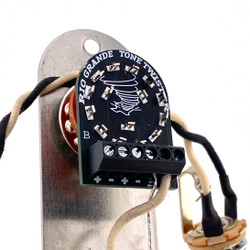
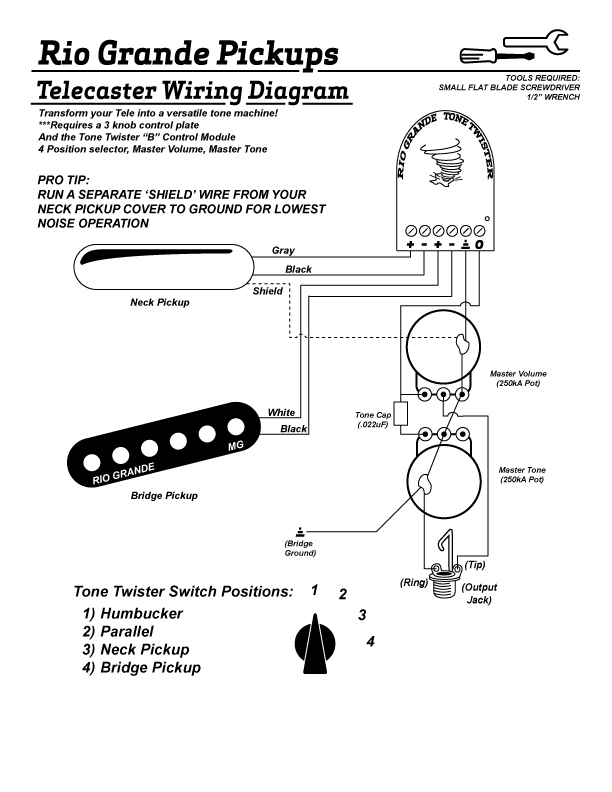
Partially inspired by the need for a fatter, higher output option on a Tele, we created the Tone Twister: a creative 4-way switching module that adds extra tonal versatility to any guitar. With just one switch, the Tone Twister gives you on-demand tonal variety without the traditional downsides. No soldering, no splicing factory wiring, and no steep learning curve. The Tone Twister gives you access to those bigger, thicker, more mid-forward tones of series wiring and the bright, open tones of parallel wiring in a way that’s simple, reversible, and player-friendly.
On the Tone Twister, the first position unlocks series wiring right out of the gate. This position provides more punch, less icepick, and can act almost like a built-in lead boost. Great for solos, classic rock rhythm, and humbucker tones.
The second position is where the classic parallel circuit resides. This position gives you great articulation and clarity for funky rhythms and that familiar blended Tele tone with a nice sparkle.
In the third and fourth positions, you still have access to the neck and bridge pickups by themselves, just like you would with any standard switch.
Our Favorite Applications
Throughout our thorough testing and many implementations of the Tone Twister, we’ve found that the two-pickup configuration is where it really shines. For the most common two-pickup situations, we made installation easy with our Tone Twister Pre-Wired Control Plates for Telecaster and Jazz Bass. Coming in stainless steel and chrome finishes respectively, we’ve made all the hard decisions for you when it comes to pots, caps, and jacks. Each control plate is wired with CTS 250k pots, a 1/4" Switchcraft Jack, and film tone caps. Tele control plates replace the blade switch with the Tone Twister Module and feature a 150k/.001 Treble Bleed mod. Jazz Bass control plates replace the two mixer volume pots with the Tone Twister Module and a master volume pot.
With the Pre-Wired Tone Twister Control Plates, you can get that “missing mode” from a two-pickup setup with more push, more body, and more authority without even picking up a soldering iron.
As Easy as One, Two, Three (Turns of a Screwdriver)
Adding a Tone Twister to your guitar gives you real tone leverage that doesn’t require hours of labor at the workbench. With just a few turns of a screwdriver, you get punchy, thick humbucker tones from series wiring along with the open, articulate tones from parallel wiring. It changes output, midrange, and feel in a way that most pickup swaps can’t replicate by themselves. The Tone Twister is the easiest way to get that leverage without soldering, without rewiring your switch, and without turning your guitar into a weekend project.
If you can use a screwdriver, you can install it.
Come back next month when we talk about our Tone Twister Humbucker series of pickups and how THEY work with the Tone Twister Control Module!